Dominican Republic Advances Agricultural Inventories and Climate Mitigation Options

Santo Domingo, Dominican Republic — From 26 to 28 May,
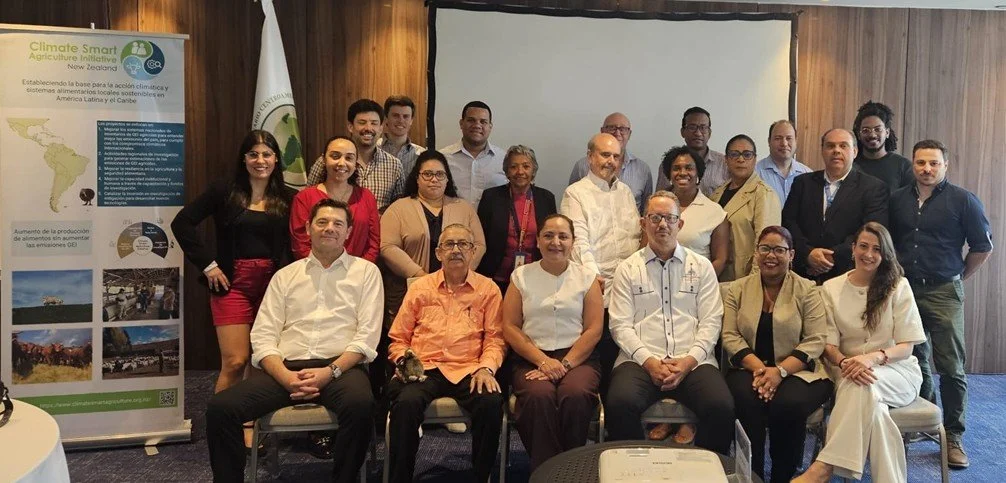
The Dominican Republic has taken an important step toward strengthening its agricultural greenhouse gas (GHG) inventory system through technical workshops that brought together two complementary programmes funded under the New Zealand Climate Smart Agriculture (NZCSA) Initiative and delivered through the Executive Secretariat of the Central American Agricultural Council (SECAC).
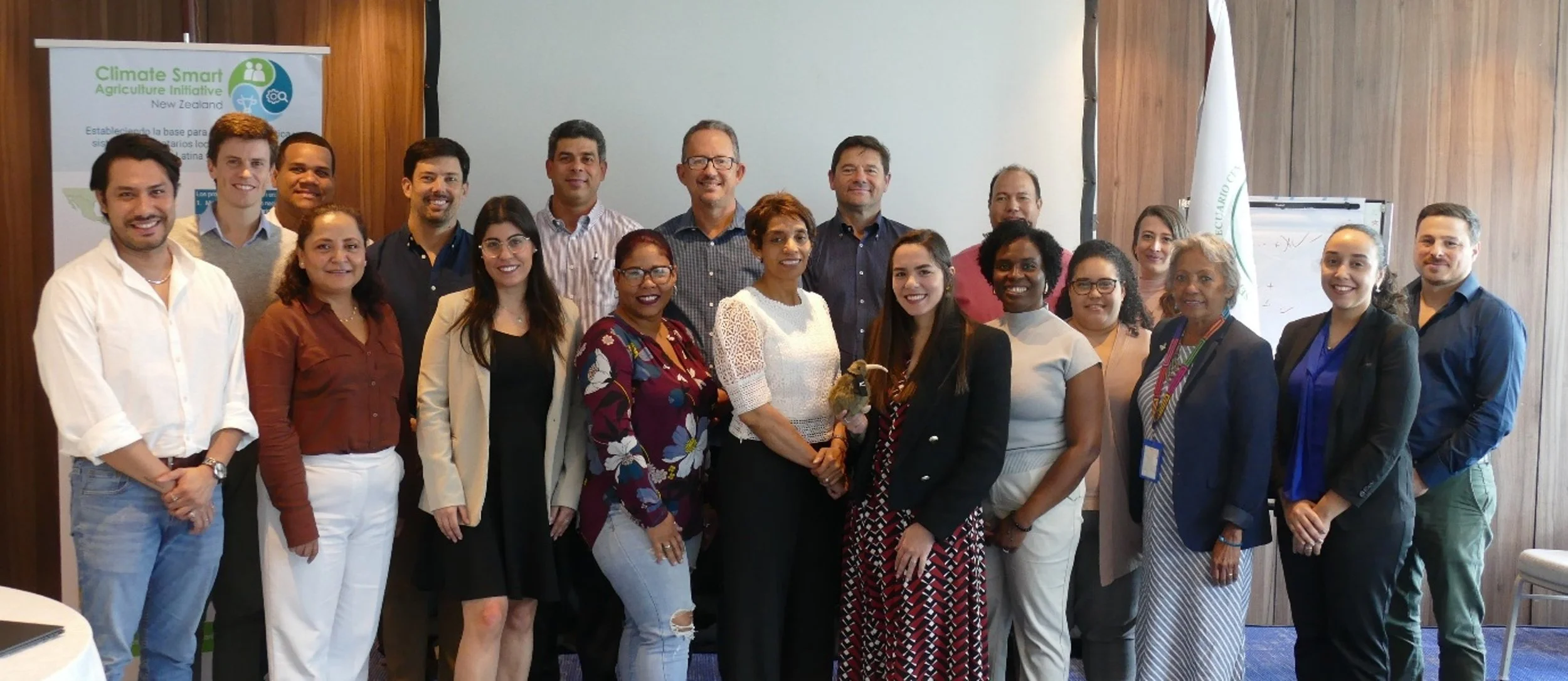
The workshops convened representatives from national institutions responsible for agriculture, environment, statistics, and climate change; The food and Agriculture Organization of the United Nations (FAO) and New Zealand, to participate in the “Validation of Improvements in the Agriculture Sector of the National Greenhouse Gas Inventory (GHGI) and Identification of Mitigation Options in the Dominican Republic” workshop.
This activity represented the culmination of NZCSA-supported efforts to strengthen agricultural emissions measurement and brought together two programmes working toward a common objective:
The regional SECAC-led project, “Strengthening the Quantification of Greenhouse Gas (GHG) Emissions in the Agricultural Sector of the SICA Region.”
Both initiatives are funded by the Government of New Zealand through its Climate Smart Agriculture Initiative, as part of New Zealand’s contribution to the Global Research Alliance on Agricultural Greenhouse Gases (GRA).
The workshops demonstrated the value of bringing together regional and international expertise to strengthen the Dominican Republic’s capacity to measure, report, and reduce agricultural emissions. Importantly, they served as the final activity in these two NZCSA programmes, creating a unique opportunity to align inventory improvement efforts with practical climate-smart agriculture interventions being implemented on the ground.
Building Capacity for the Transition from Tier 1 to Tier 2
A key objective of the training was to assist the Dominican Republic in developing the technical capacity required to transition from IPCC Tier 1 inventory methodologies toward Tier 2 approaches for key agricultural emission sources, particularly within the livestock sector. Through the strong engagement of national institutions and the technical expertise provided by Felipe Garcia and his team, we are confident this objective will be achieved.

For many countries, Tier 1 methodologies are the starting point for agricultural GHG inventories. Tier 1 uses international default emission factors published by the Intergovernmental Panel on Climate Change (IPCC) to estimate emissions. While these methods are relatively simple to apply, they may not fully reflect a country's specific farming systems, animal productivity, feed quality, climates, or management practices.
In contrast, Tier 2 methodologies use country-specific data and emission factors. This allows inventories to more accurately represent national circumstances and provides a stronger evidence base for decision-making. For livestock emissions, for example, Tier 2 methods can account for differences in animal breeds, feed characteristics, production systems, and management practices that influence methane emissions.
By strengthening national data systems and technical expertise, the Dominican Republic is laying the groundwork for a more robust and accurate agricultural inventory that can better support national climate commitments and planning.
From Better Measurement to Better Policy
The policy implications of this work are significant. More accurate agricultural emissions data enables governments to identify the most important sources of emissions, evaluate the effectiveness of mitigation measures, and prioritise investments where they will deliver the greatest impact.
A stronger inventory system also supports evidence-based policymaking by helping decision-makers develop climate strategies that are tailored to national circumstances. Improved emissions information can guide agricultural development programmes, inform nationally determined contributions (NDCs) under the Paris Agreement, strengthen reporting obligations, and support access to international climate finance by demonstrating measurable progress and credible mitigation potential.
Ultimately, better data allows governments to design policies that support farmers in increasing productivity and resilience while reducing greenhouse gas emissions.
Technical Improvements and Mitigation Opportunities
During the workshop, participants reviewed and validated improvements made to the agricultural component of the National Greenhouse Gas Inventory, including updated methodologies for estimating livestock emissions and enhancements to the organisation and quality of national activity data. Technical teams worked together to strengthen data management processes and identify priorities for future inventory development.
The event also provided an important platform for inter-institutional dialogue, bringing together organisations that often work independently but share responsibility for supporting a resilient and sustainable agricultural sector. Discussions focused not only on improving emissions inventories but also on translating improved measurement into practical climate action.
Participants identified and prioritised several mitigation measures suited to national circumstances, including improved livestock feeding practices, silvopastoral systems, good agricultural practices, and more efficient water management in rice production.
What is a Silvopastoral System?
One of the mitigation options discussed was the adoption of silvopastoral systems, which integrate trees, shrubs, forage plants, and livestock production on the same land.
A practical example would be a cattle farm where animals graze improved pasture beneath rows of nitrogen-fixing trees such as Leucaena, while additional trees are planted around paddocks and waterways. The trees provide shade that reduces heat stress on animals, improve soil health, increase biodiversity, and can enhance feed quality through browse material. At the same time, the trees capture and store carbon, helping to offset emissions from livestock production.
Silvopastoral systems have been successfully implemented across Latin America and are widely recognised as a climate-smart agriculture practice that can improve productivity, resilience, and environmental outcomes simultaneously.
Strengthening Climate-Smart Agriculture
The discussions also recognised that the Dominican Republic already possesses valuable experience and ongoing initiatives in climate-smart agriculture that can help accelerate implementation of mitigation actions. Beyond the technical outcomes, the workshop reinforced the importance of strong partnerships, knowledge sharing, and coordinated action in addressing climate challenges.
By combining the strengths of two NZCSA programmes and delivering support through SECAC with technical leadership from Felipe Garcia and his team, the activity strengthened national capacity to develop more robust agricultural GHG inventories while laying the foundation for future adoption of Tier 2 methodologies.
As the Dominican Republic continues to strengthen its systems for measuring, reporting, and verifying agricultural emissions, this collaboration demonstrates how targeted technical assistance and regional cooperation can support countries in building more resilient, productive, and climate-smart agricultural systems while ensuring that climate policies are informed by increasingly accurate and nationally relevant data.