From Waste to Wisdom: How Smarter Goat and Sheep Farming Could Transform Climate Action in The Bahamas
When most people picture The Bahamas, they imagine turquoise water, coral reefs, and holiday postcards—not goats and sheep. Yet small ruminants play an important role in the country’s food security, rural livelihoods, and climate resilience. A new report from NZCSA’s Bahamas project reveals that these humble animals could even become key players in the nation’s journey towards a low‑emissions future.
But the findings also highlight a challenge: while goats and sheep are well‑suited to island environments, current farming systems are missing big opportunities to recover waste, improve productivity, and reduce greenhouse gas emissions. With strategic improvements—many of them low‑cost—the sector could shift from “business as usual” to a beacon of climate‑smart agriculture.
Let’s unpack what the report found, and why it matters.
Farming Today: Resilient but Underperforming
Goat and sheep farming in The Bahamas relies mostly on extensive grazing. Animals roam and browse in open areas, with little supplementary feeding, limited shelter, and minimal record‑keeping. This system is traditional and low‑input—but it’s also low‑output.
Key challenges identified in the report include:
Very slow growth rates: Some goats take up to three years to reach slaughter weight—double or triple the time seen elsewhere in the Caribbean.
Poor infrastructure: Many night pens have bare dirt floors, making it impossible to collect manure and easy for nutrients to be lost.
Limited forage development: While a few farmers grow improved grasses like Mombasa or Mulato, most rely on native vegetation with inconsistent quality.
No national animal identification or traceability system: This makes breeding improvements, health monitoring, and disease control very difficult.
Compared to countries like Jamaica or Barbados—where traceability, performance recording, and forage systems are far more advanced—The Bahamas has significant ground to cover.
The Hidden Climate Opportunity: Manure
One of the most striking findings is the missed potential of manure. Right now, most manure simply piles up under night pens or disperses on the ground. This unmanaged waste contributes to methane and nitrous oxide emissions—potent greenhouse gases.
But the report shows that with simple changes, manure could become a climate solution rather than a climate problem.
1. Composting: Installing slatted floors, concrete pads, or covered pits could allow farmers to collect manure cleanly and compost it. This reduces methane emissions and produces valuable fertiliser for forage crops.
2. Biogas: Small farms might struggle to run individual digesters, but cooperative biogas systems could work. These convert manure into renewable energy while capturing nutrients.
3. Forage Integration: Using composted manure to grow improved grasses would increase feed quality and reduce reliance on imported synthetic fertilisers. These aren’t high‑tech dreams—they’re practical, low‑cost options already used elsewhere in the Caribbean.
Feeding the Future: How Better Forage Improves Productivity
The report highlights a major issue: many goats and sheep simply aren’t getting the nutrition they need to grow efficiently.
Boosting forage quality—through grasses like Mombasa and Mulato or legumes like Sunn Hemp—can:
Improve growth rates
Shorten time to slaughter
Reduce methane emissions per kilogram of meat
Make farms more resilient to drought
The report also encourages silage‑making, which uses molasses to preserve grasses for the dry season.
Smarter Herds Through Better Data
In a world moving towards carbon markets and climate regulation, data is power. But in The Bahamas, data is scarce.
The report recommends:
A national Animal Identification and Traceability System (AITS)
Digital record‑keeping apps for tracking growth, feed, manure, and health
Standard operating procedures (SOPs) for manure and fertiliser use
Tier 2 IPCC‑aligned methods to monitor greenhouse gas reductions
These systems don’t just help farmers—they enable the country to participate in emerging carbon credit markets, turning sustainability into revenue.
Health, Genetics, and Infrastructure: The Other Pieces of the Puzzle
Beyond waste and forage, the report calls for:
Genetic improvement programmes to increase carcass yields
Stronger veterinary and biosecurity systems to reduce disease risks
Infrastructure upgrades that improve animal welfare and enable waste capture
Guardian dogs to reduce losses from predation (often by domestic pets, not wild animals as previously assumed)
Together, these interventions create a pathway to higher productivity and lower emissions.
Why This Matters for Climate‑Smart Agriculture
The Bahamas has already passed strong climate legislation, including the Climate Change and Carbon Market Initiatives Act (2022). But national capacity to measure and verify emissions is still developing.
Small ruminant farming may seem minor, but the sector could become a flagship for climate‑smart agriculture, offering:
Lower emissions from improved feeding and manure management
Better soil health through compost use
Stronger food security
New income from carbon markets
A more resilient farming sector in the face of hurricanes and heat stress
This is exactly the kind of integrated, science‑driven transformation NZCSA champions.
The Bottom Line: From Gap to Opportunity
The report paints a clear picture: while goat and sheep systems in The Bahamas face real challenges, the potential for improvement is enormous—and achievable.
With targeted support, better infrastructure, and data‑driven management, small ruminants can move from being an underperforming sector to a climate‑smart success story. Farmers, policymakers, and the environment all stand to benefit.
Sustainability wins start with practical steps….such as with a simple goat pen on a small Caribbean island.
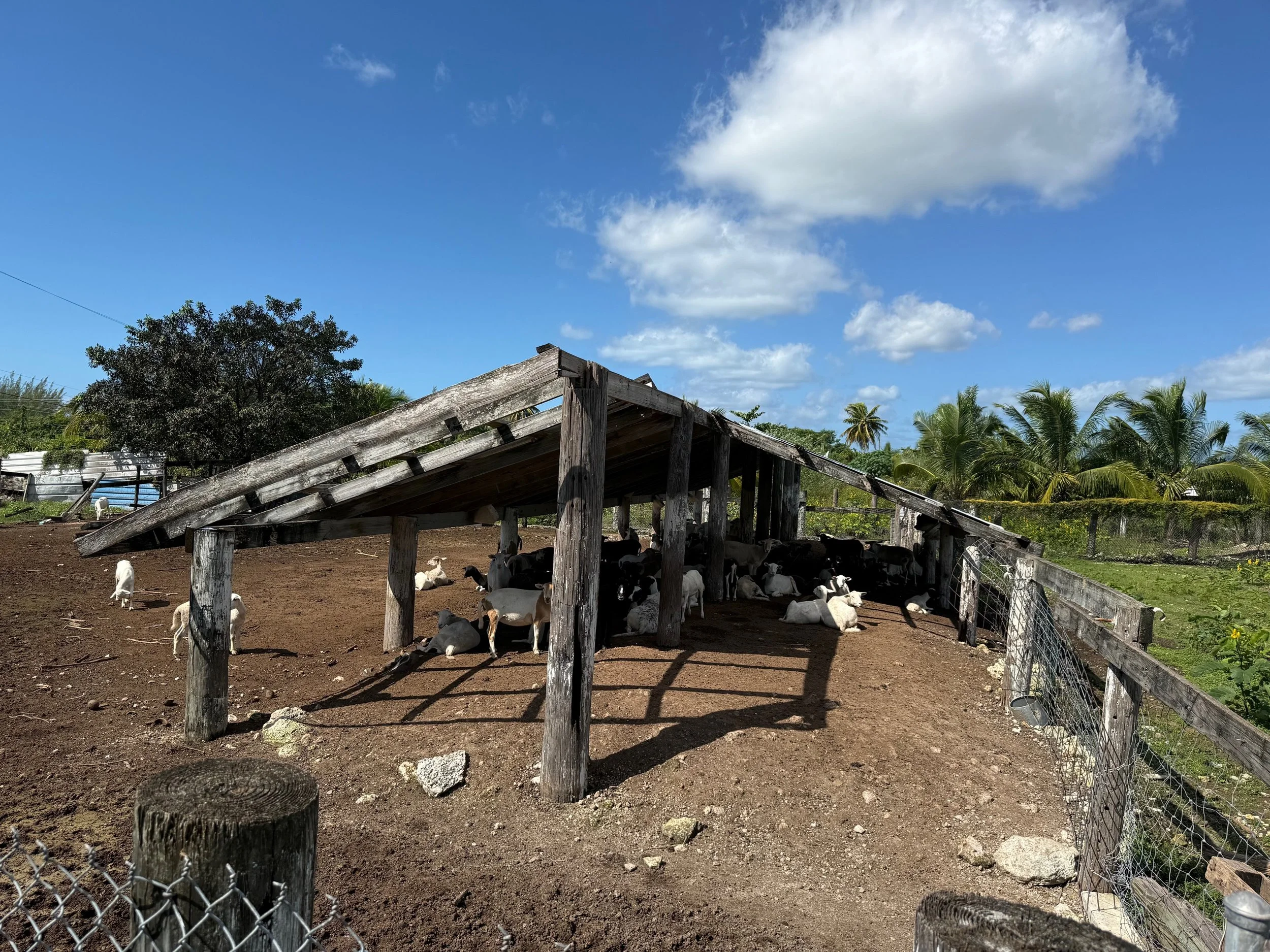
The site of one of the projects feed trials.
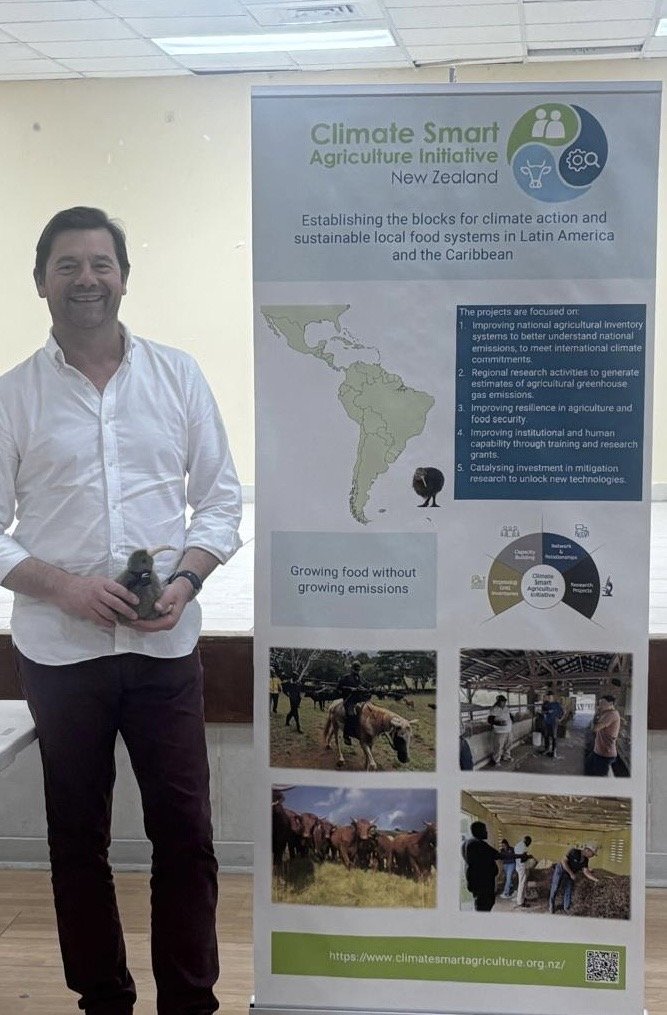
NZCSA's Programme Director, Lee Nelson, very happy with the important and practical findings of the new report.
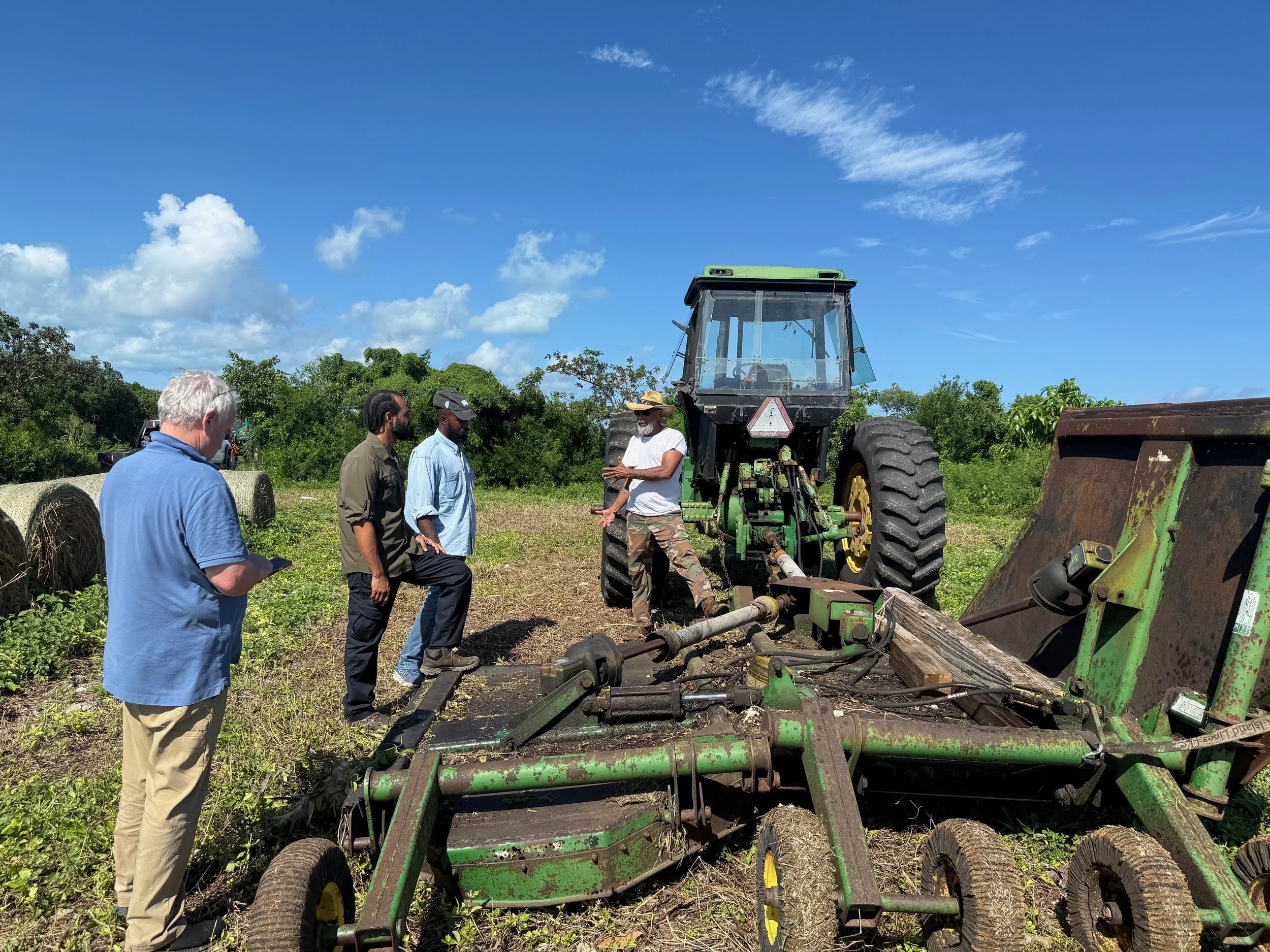
Discussions between International consultants, national officials and participating farmers.