New Zealand Commits to the New Phase of Climate Smart Agriculture Collaboration in ASEAN
New Zealand is beginning the next chapter of its Climate Smart Agriculture (NZCSA) Initiative with Southeast Asia, building on five years of collaboration helping countries to better understand and reduce agricultural greenhouse gas emissions. The initiative will continue supporting climate-smart agriculture efforts across the ASEAN region, including in Cambodia, Indonesia, Lao PDR, Malaysia, the Philippines and Viet Nam.
WithNZ$610,000 in funding from the Ministry of Foreign Affairs and Trade (MFAT), the Ministry for Primary Industries (MPI) will deliver a one-year extension programme designed to maintain momentum, support ongoing regional collaboration, and build on the achievements of the first phase.

NZCSA partners from ASEAN, New Zealand and regional organisations gathered in Bangkok at the conclusion of Phase One of the programme (July 2025).
Looking Ahead: What Phase Two Will Include
The one-year extension provides continuity. The New Zealand based team will continue working alongside established regional partners. The extension supports countries across ASEAN to achieve their commitments through continued strengthening of their understanding of agricultural emissions, developing locally relevant mitigation options, and building the expertise needed to sustain this work into the future. It also provides opportunities for researchers, policymakers, and farmers to learn from one another and share practical experiences.
Planned activities include:
Hosting a regional priority setting and investment forum and supporting research that advances food security and agricultural mitigation policy in the region;
Knowledge extension to farmers through field days which demonstrate practical high productivity low emissions on farm solutions; and
Training the trainers of GHG inventories to ensure the sustainability of agricultural GHG emissions and productivity inventory expertise, so that local experts can use high quality data for international target tracking and policy decisions into the future. Note that this will ensure sustainability of the work to date, and will take place at the regional measurement hubs set up during phase 2 at the University of the Philippines Los Banos (UPLB) and the Vietnam Institute of Animal and Veterinary Sciences (VIAVS).
A Strong Foundation for Future Action
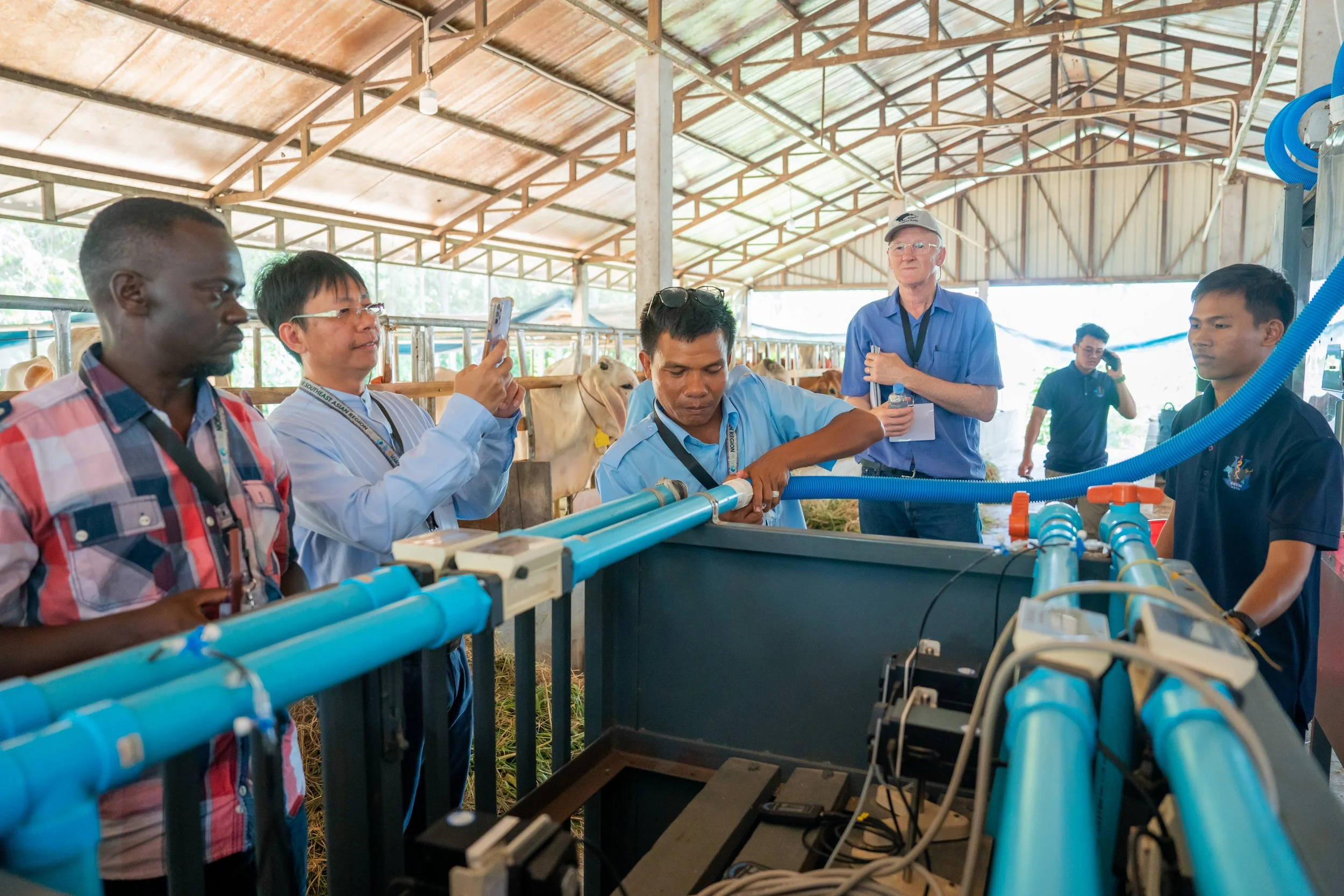
NZCSA ASEAN GHG Experts Convened at new GHG Measurement facility in Cambodia to create guidelines for Livestock Methane Studies in Southeast Asia (Feb 2025)
From 2020 to 2025, the New Zealand Climate Smart Agriculture Initiative worked alongside partners in six ASEAN countries: Cambodia, Indonesia, Lao PDR, Malaysia, the Philippines, and Viet Nam.
The programme helped countries improve their agricultural greenhouse gas inventories, strengthen climate research capability, identify practical emissions reduction opportunities, and integrate agriculture more effectively into climate policy and planning.
Over five years, the initiative:
Improved agricultural greenhouse gas inventories across six ASEAN countries.
Trained more than 350 researchers and policy officials.
Established regional emissions measurement hubs in Indonesia, the Philippines, and Viet Nam.
Supported the development and testing of low-emissions livestock feeding and management practices.
Contributed to improvements in national climate commitments and agricultural strategies.
Strengthened regional networks and partnerships between governments, researchers, and agricultural organisations.
The Initiative also demonstrated practical solutions for reducing emissions from livestock systems in tropical environments. In the Philippines, for example, researchers developed a leucaena-based feed option reducing methane emissions by around 26 percent while remaining relevant in local farming systems.
Why the NZCSA Matters for ASEAN
Southeast Asia is home to some of the world's most dynamic agricultural systems and faces significant challenges from climate change. Agriculture plays a vital role in food security, rural livelihoods, and economic development across the region, making climate-smart solutions increasingly important.
The NZCSA programme supported countries across ASEAN to build the knowledge, skills, and evidence needed to better understand agricultural emissions and identify practical ways to reduce them. Through collaboration between governments, researchers, technical experts, and farmers, the programme helped strengthen regional capability to address climate challenges while supporting productive and sustainable farming systems.
Over five years, strong partnerships have been built across the region. These relationships have enabled countries to share experiences, learn from one another, and develop approaches that are tailored to local farming systems and national priorities.